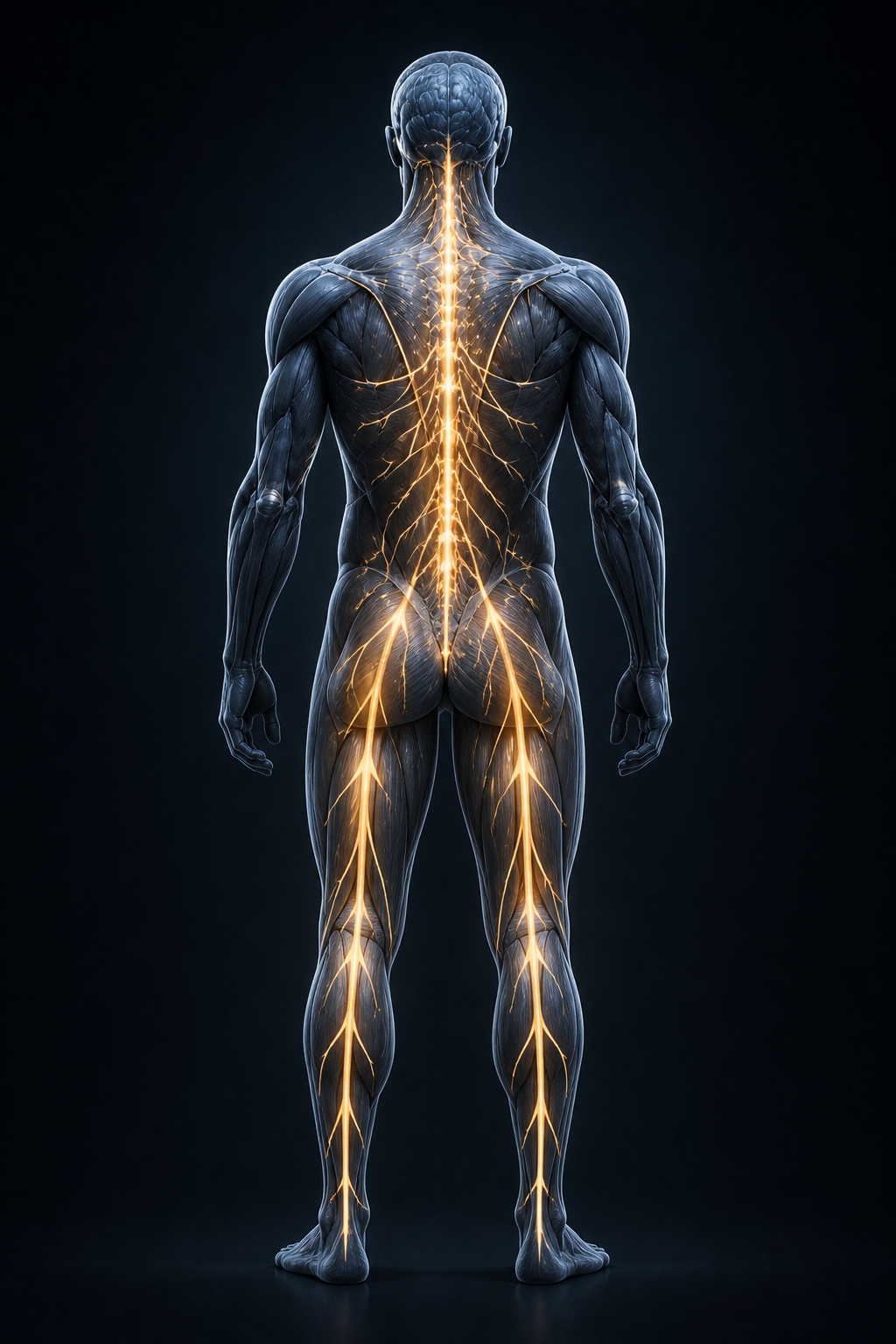
UNDERSTAND THE LANGUAGE OF LOAD PATHS
The most common way the body organizes under load is through global counterbalance patterns that help us stay upright and move.

WHAT ARE LOAD PATHS?
Load paths are coordinated patterns of muscle activity organized by the nervous system in response to gravitational load.
They describe how muscle activity is distributed across the body under load.
1 - LOCATION
Where is the tension?
The first word identifies the primary region where muscle tension is concentrated
Example: Posterior, Anterior, Lateral
1 - LOCATION
Where is the tension?
The first word identifies the primary region where muscle tension is concentrated
Example: Posterior, Anterior, Lateral
1 - LOCATION
Where is the tension?
The first word identifies the primary region where muscle tension is concentrated
Example: Posterior, Anterior, Lateral
1 - LOCATION
Where is the tension?
The first word identifies the primary region where muscle tension is concentrated
Example: Posterior, Anterior, Lateral
WHAT ARE LOAD PATHS?
1. What this is NOT
Load paths are not something the “body uses.”
Muscles do not decide to act, protect, or guard.
These are metaphoric terms used to describe what we feel is happening.
2. What is actually happening
The nervous system responds to load.
It changes muscle activity according to changes in demand.
3. What we mean by Load Paths
Load paths are externally observable patterns of muscle activity under load, based on what can be seen and felt from the outside.
4. Why this matters
One of the key aspects of treatment decision making is based on externally observable patterns of organization under load.
POSTERIOR COUNTERBALANCE LOAD PATH
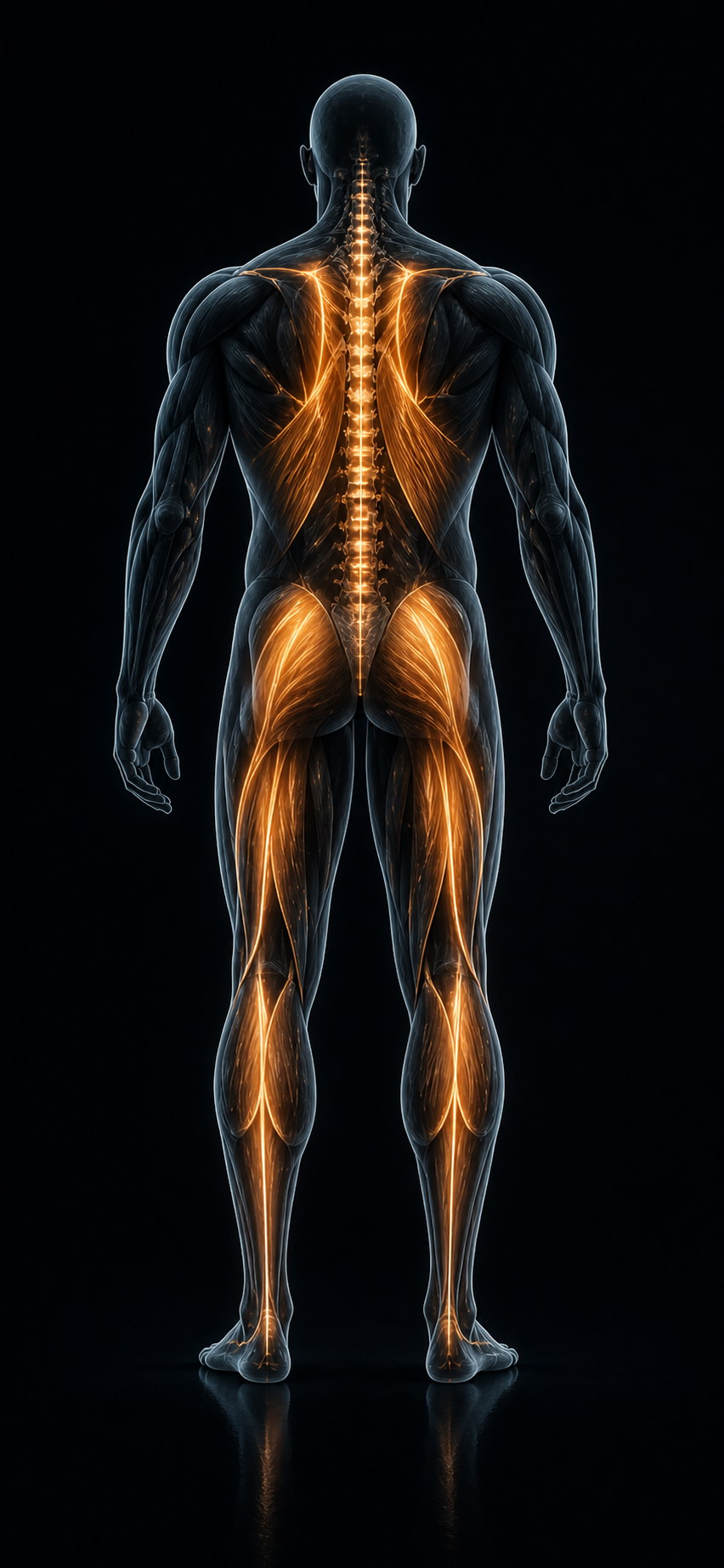
When increased tension along these lines are palpated, it is generally a counterbalance to increased demand or instability in the frontal plane.
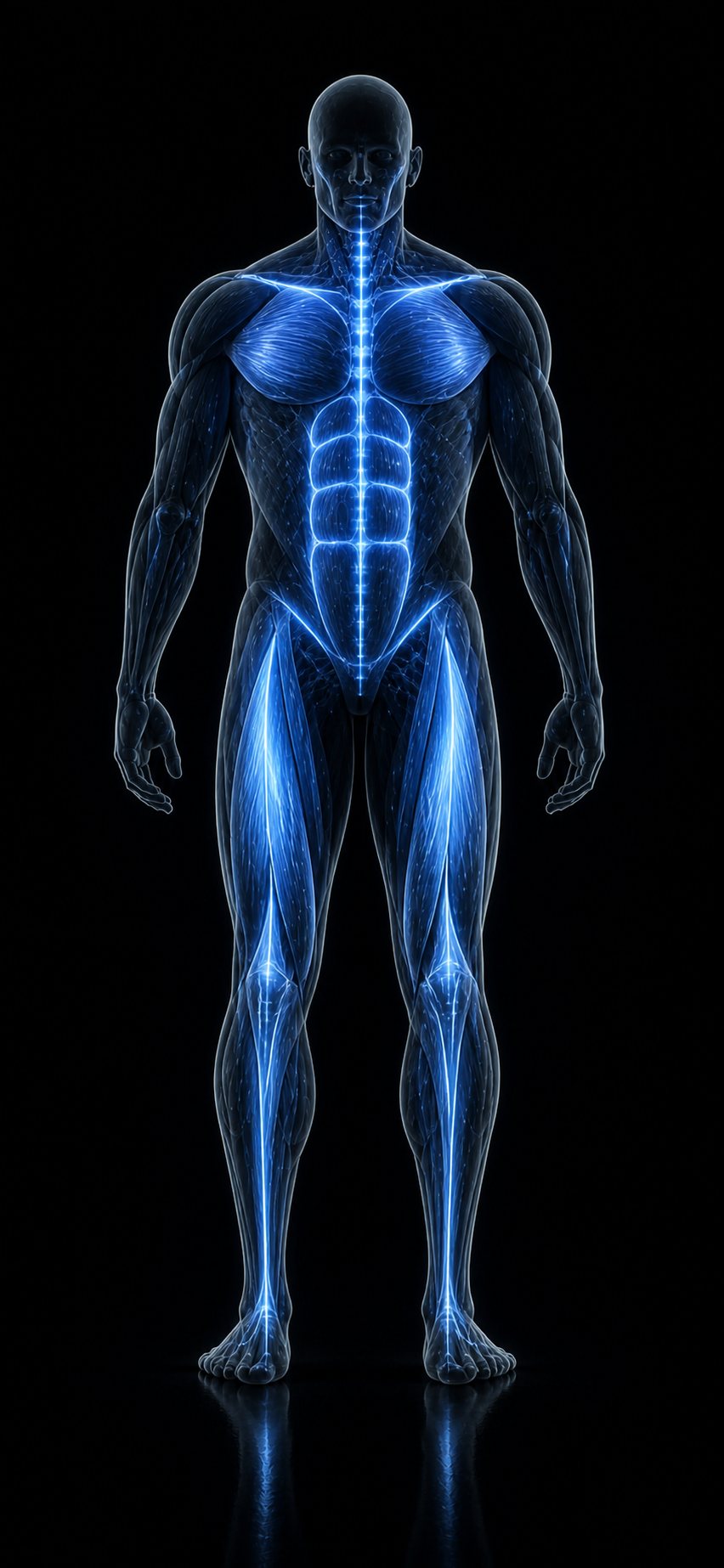
When increased tension along these lines are palpated, it is generally a counterbalance to increased demand or instability in the posterior plane.
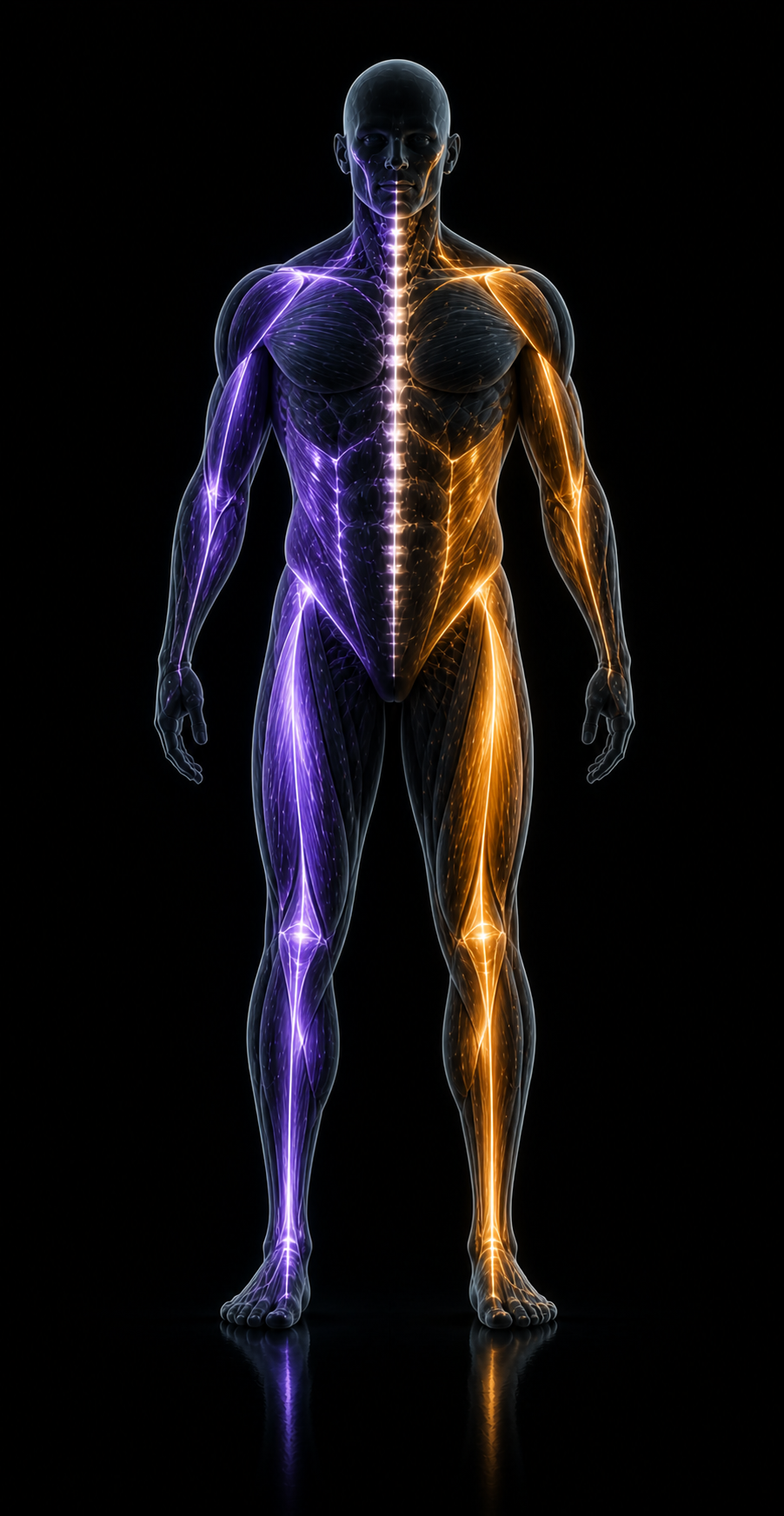
When increased tension along these lines are palpated, it is generally a counterbalance to increased demand or contralateral (opposite side) plane.
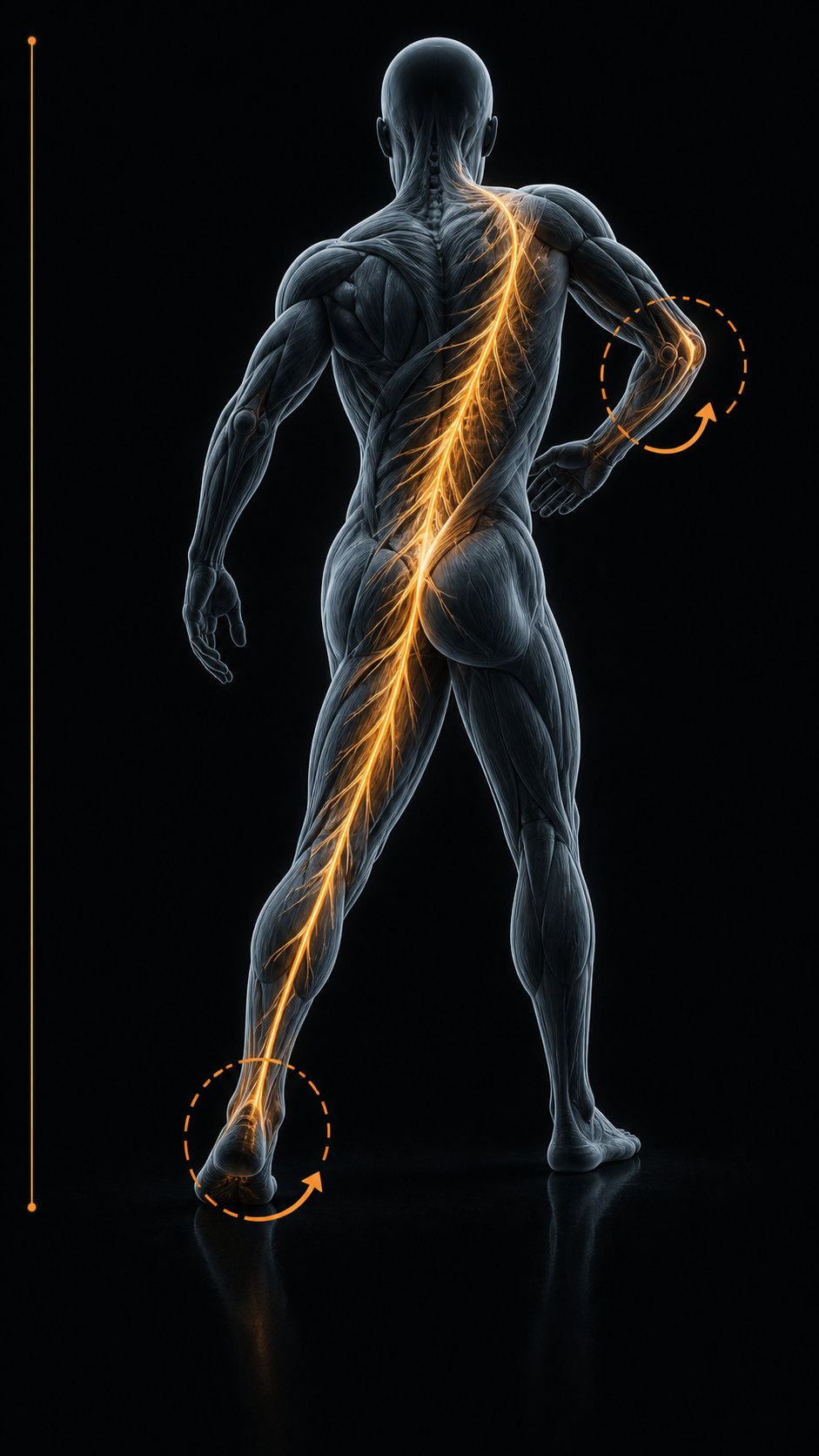
When increased tension along these lines are palpated, it is generally a counterbalance to increased demand or contralateral (opposite side) plane.